
This is a follow-up to our previous article: How Your Bedroom Paint Color Impacts Your Sleep.
The specific research and exact statistics cited in the News4 report by Erika Gonzalez—including the fact that people in blue rooms sleep an average of 7 hours and 52 minutes, while people in purple rooms get under 6 hours—come from a highly publicized, landmark industry study conducted by Travelodge.
Because hotels have a financial interest in ensuring guests get a perfect night’s rest, the UK-based hotel chain commissioned a large-scale study surveying 2,000 households to analyze the direct correlation between bedroom wall color and sleep duration.
The data and scientific backing behind that report are broken down below:
1. The Core Source: The Travelodge Sleep Study
The precise data points featured in the news segment on how colors impact nightly sleep duration include:
| Room Color | Average Nightly Sleep | Psychological / Physiological Impact |
|---|---|---|
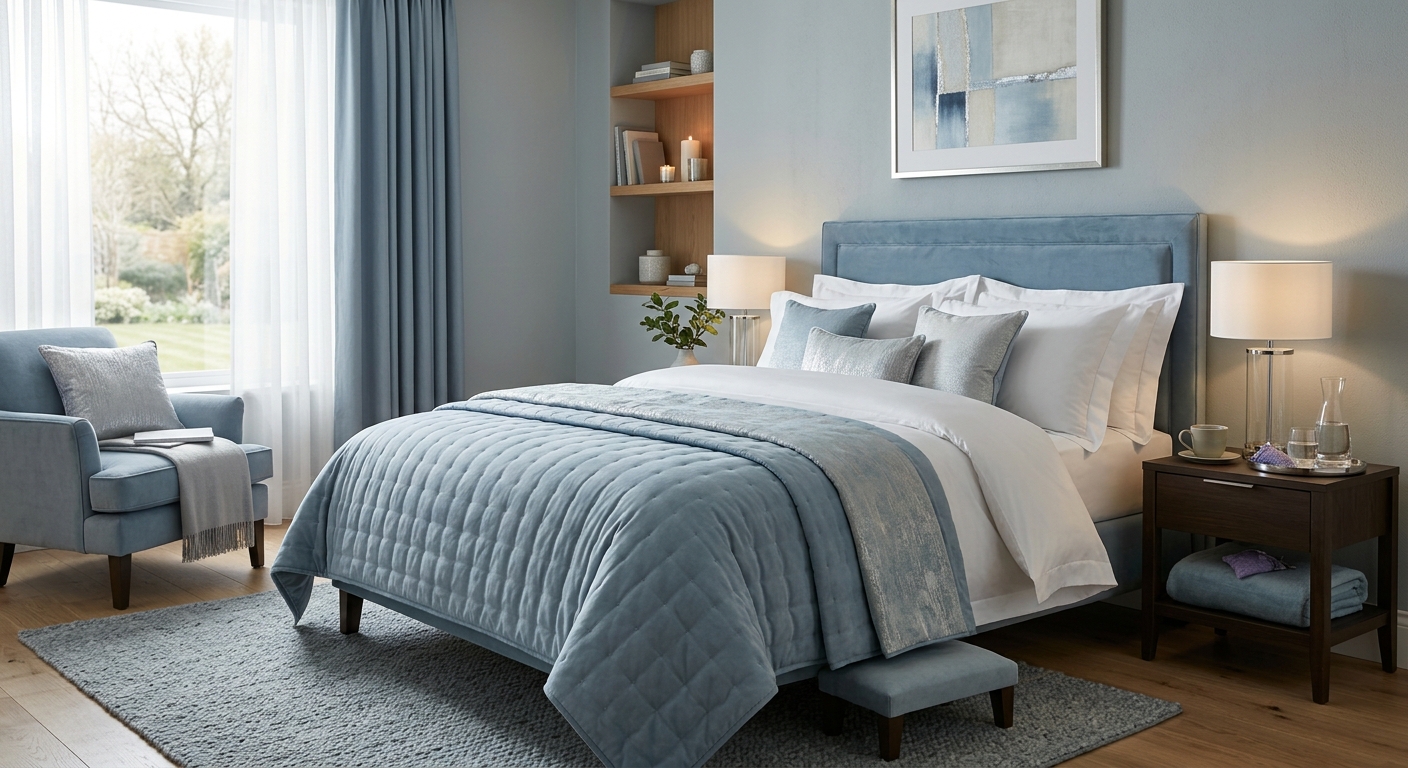
| Blue | 7 hours, 52 minutes | The Winner: Triggers calmness; lowers heart rate and blood pressure. 58% of respondents woke up feeling happy. |
| Yellow | 7 hours, 40 minutes | Relaxes the body by stimulating the nervous system and calming the nerves. |
| Green | 7 hours, 36 minutes | Evokes a connection to nature; creates a comforting, balanced vibe. |
| Silver | 7 hours, 33 minutes | Mimics moonlight, signaling to the brain that it is nighttime. |
| Purple | 5 hours, 56 minutes | The Worst: Highly stimulating to the brain, boosts subconscious creativity, and can trigger vivid nightmares. |
| Brown / Gray | Restless / Disrupted | Creates a dreary, somber atmosphere that can induce feelings of isolation or nighttime anxiety. |
2. The Medical Expert Cited in the Research
To provide clinical validity to the survey’s findings, the research leaned on Dr. Chris Idzikowski, a renowned sleep specialist from the Edinburgh Sleep Centre.
He explained the biological reason why the color blue won by such a wide margin:
“This is an amazing result, as there are specialized receptors called ganglion cells in the retina part of our eyes, which are most sensitive to the color blue. These receptors absorb the light, relay information to a part of our brain that controls our 24-hour body clock, and heavily influence how we perform and feel during the day.”
3. Complementary Medical Science (The Lüscher Color Theory)
When sleep experts talk about these color studies on television, they also reference foundational color psychology, such as the Lüscher Color Test (developed by Dr. Max Lüscher). His peer-reviewed clinical data historically proved that the human brain universally links the color blue to physical passivity, tranquility, and a deceleration of the central nervous system—which is exactly what the body needs to transition into deep REM sleep.
Want to see the actual numbers behind this?
Read our deep dive into the data: The Science Behind Sleep Colors: The Landmark Travelodge Study.