
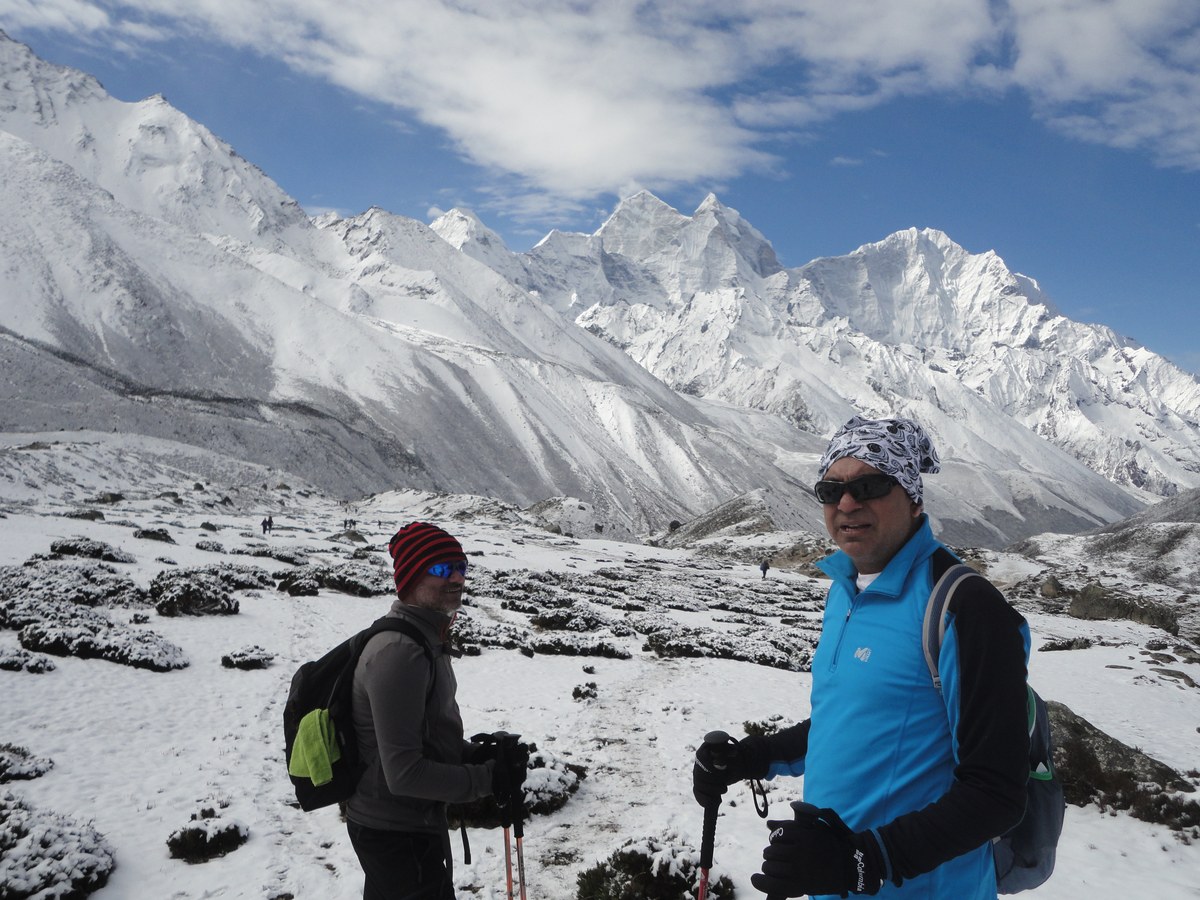
Photo by Adventureaonetrek on Wikimedia Commons (CC BY 4.0): The breathtaking trail to Mount Everest Base Camp in Nepal, where high altitude silence tests the limits of human resilience.
Most travelers venturing to the high Himalayas pack heavy down parkas, thermal base layers, and windproof outer shells. Michael Cullen, affectionately known across the United Kingdom as Speedo Mick, is preparing for something entirely different.
As reported by the BBC, the sixty one year old Liverpudlian fundraiser is flying to Kathmandu on November 10 to embark on what he calls his four peaks challenge: trekking all the way to Mount Everest Base Camp (5,364 meters above sea level) in minus ten degrees Celsius (fourteen degrees Fahrenheit) temperatures clad only in his iconic blue Everton swimming trunks, hiking boots, and a backpack. Following his Himalayan expedition, he will journey to Scotland to complete a 1,000 mile walk to Land’s End while summiting the three highest peaks of Britain, aiming to raise another one million pounds for mental health, disadvantaged youth, and homelessness.
While the image of a man trekking through glacial moraines in swimwear might appear eccentric, when viewed through the salutogenic philosophy of OmOrenda, Speedo Mick’s journey touches upon something profound: the alchemy of voluntary suffering, somatic cold exposure, and the sacred agency of service.
Voluntary Suffering for Collective Healing
Michael Cullen is candid about the physical ordeal ahead. “I am going to do Everest in my knickers,” he shared with the BBC. “I do understand the risks; I always do. It will be a challenge to stay in my Speedos. I will suffer, but that is the challenge.”
Having previously battled addiction, depression, and personal adversity, Cullen discovered that stepping directly into intense physical discomfort could be transformed into a powerful beacon of hope for others. To date, he has raised over one million pounds, supporting more than one hundred twenty grassroots organizations across the United Kingdom that care for at risk youth and families facing homelessness.
By stripping off conventional clothing, he symbolically strips away the social stigma surrounding mental illness and vulnerability. His physical shivering becomes an invitation for open dialogue: reminding communities that beneath our societal defenses, human beings need connection, empathy, and collective support.
1. The Himalayan Crucible
Trekking to Mount Everest Base Camp at 5,364 meters in sub zero temperatures clad only in Everton trunks, boots, and a backpack.
2. The British Three Peaks
Summiting Ben Nevis, Scafell Pike, and Snowdon during an arduous 1,000 mile endurance walk from John O’Groats to Land’s End.
3. Raising 1 Million Pounds
Transforming physical vulnerability and cold exposure into grassroots funding for youth mental health, addiction recovery, and homelessness.
The Science of Cold Hormesis and Mental Resilience
While trekking in sub zero conditions without thermal clothing carries severe hypothermic risks that demand experienced Sherpa oversight, deliberate cold exposure has long been investigated in neurobiology and integrative medicine:
- Neurochemical Modulation: Cold shock triggers a massive surge in circulating norepinephrine and dopamine, neurotransmitters deeply linked to mood elevation, mental clarity, and acute focus.
- Autonomic Adaptability: Confronting freezing temperatures forces the autonomic nervous system to cultivate deep psychological composure under acute stress, transforming panic into focused, rhythmic breathing.
- Cellular Resilience: As highlighted in thermal biology, systemic environmental challenges stimulate protective metabolic adaptations, building profound inner stamina.
The OmOrenda Perspective: Sacred Mountains and the Spirit of Orenda
Speedo Mick’s bold trek aligns deeply with the foundational worldview of OmOrenda, which bridges Himalayan contemplative stillness with Indigenous active stewardship:
1. The Sanctity of Sagarmatha and Om (The Stillness of the High Peaks)
To the Sherpa and Nepali people, Mount Everest is known as Sagarmatha (the Goddess of the Sky) or Chomolungma (Mother Goddess of the World). The Himalayas are not an adversary to conquer or dominate; they are a living, sacred sanctuary. In Eastern contemplative traditions, Om represents the fundamental ground of primordial peace. Walking through the Khumbu Valley in quiet vulnerability demands reverence, mindfulness, and humble attunement to nature’s awe inspiring scale.
2. The Healing Force of Orenda (Agency in Service of Life)
In Indigenous Haudenosaunee wisdom, Orenda is the spiritual life force that empowers conscious beings to mend fractures, protect the vulnerable, and heal their community. Cullen’s physical endurance is not an ego driven stunt; it is pure Orenda in action. By dedicating his personal stamina to rescuing struggling youth from despair, he channels life force into community regeneration. Clan Mothers taught that our lives are measured by what we give back to future generations.
3. Channeling LeoChi Consciousness
In the OmOrenda lineage, the Himalayan snow leopard, LeoChi, serves as our guardian mascot: traversing frozen ridges and high mountain passes with majestic poise, quiet power, and fierce protective devotion. Speedo Mick embodies this guardian energy: stepping boldly onto the mountain roof of the world to defend the vulnerable, proving that the human heart can generate boundless warmth even in minus ten degree cold.
Welcoming the Journey with Open Hearts
Asked how the Nepali people will receive a man walking toward Everest in bright blue swimming trunks, Cullen remarked with characteristic Liverpudlian warmth: “I reckon they will be cool. I walked to France, and the French were alright with me, so I have a good feeling about the Nepalese.”
Indeed, Nepal is a land that deeply honors spiritual pilgrims, ascetics (sadhus), and champions of compassion. As Speedo Mick takes his first steps toward Everest Base Camp, his journey serves as an inspiring reminder to us all: when we harness our personal struggles in service of a greater good, human resilience knows no limits.
References and Further Reading
- Stewart Whittingham, Liverpool’s Speedo Mick to suffer in his trunks in minus 10C Everest trek, BBC News, November 2026.
- The SpeedoMick Foundation, Grassroots Mental Health and Community Youth Grants.
- Sagarmatha Pollution Control Committee and Nepal Mountaineering Association, Khumbu Region Environmental Guidelines.