

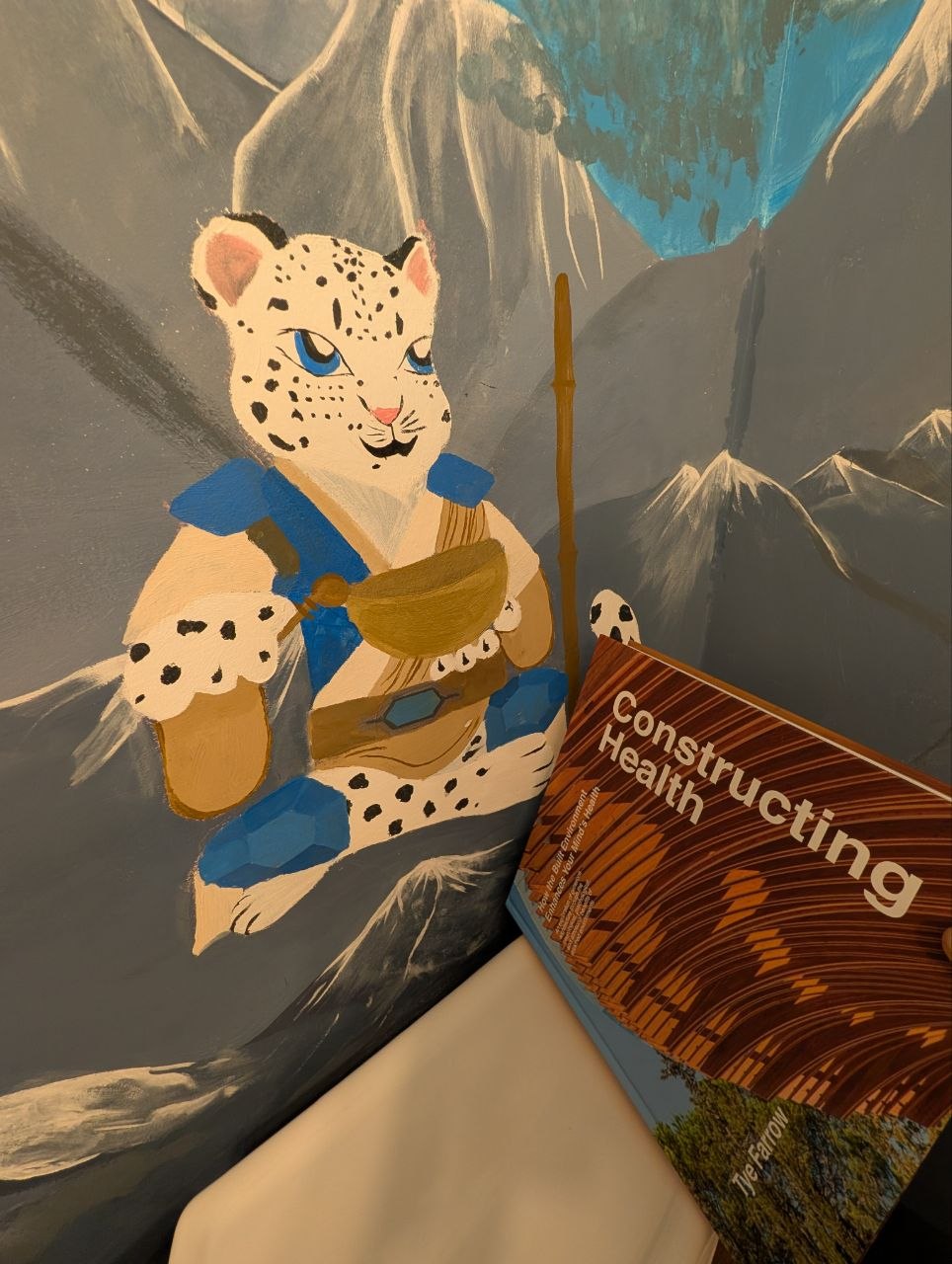
Tye Farrow’s “Constructing Health” grounded in the “Om” pillar at OmOrenda.space: The snow leopard spirit LeoChi meditating with his singing bowl before the Himalayan peaks.
For decades, modern society has evaluated architecture by what a building prevents: keeping out the freezing cold, sealing out rainfall, filtering out pollutants, and reducing carbon emissions. In other words, our finest buildings were engineered to be neutral—designed merely to cause less harm.
In his landmark book Constructing Health: How the Built Environment Enhances Your Mind’s Health, world-renowned architect Tye Farrow (Senior Partner at Farrow Partners) issues an urgent challenge to both the architectural and medical professions: What if our buildings didn’t just shelter us, but actively caused health?
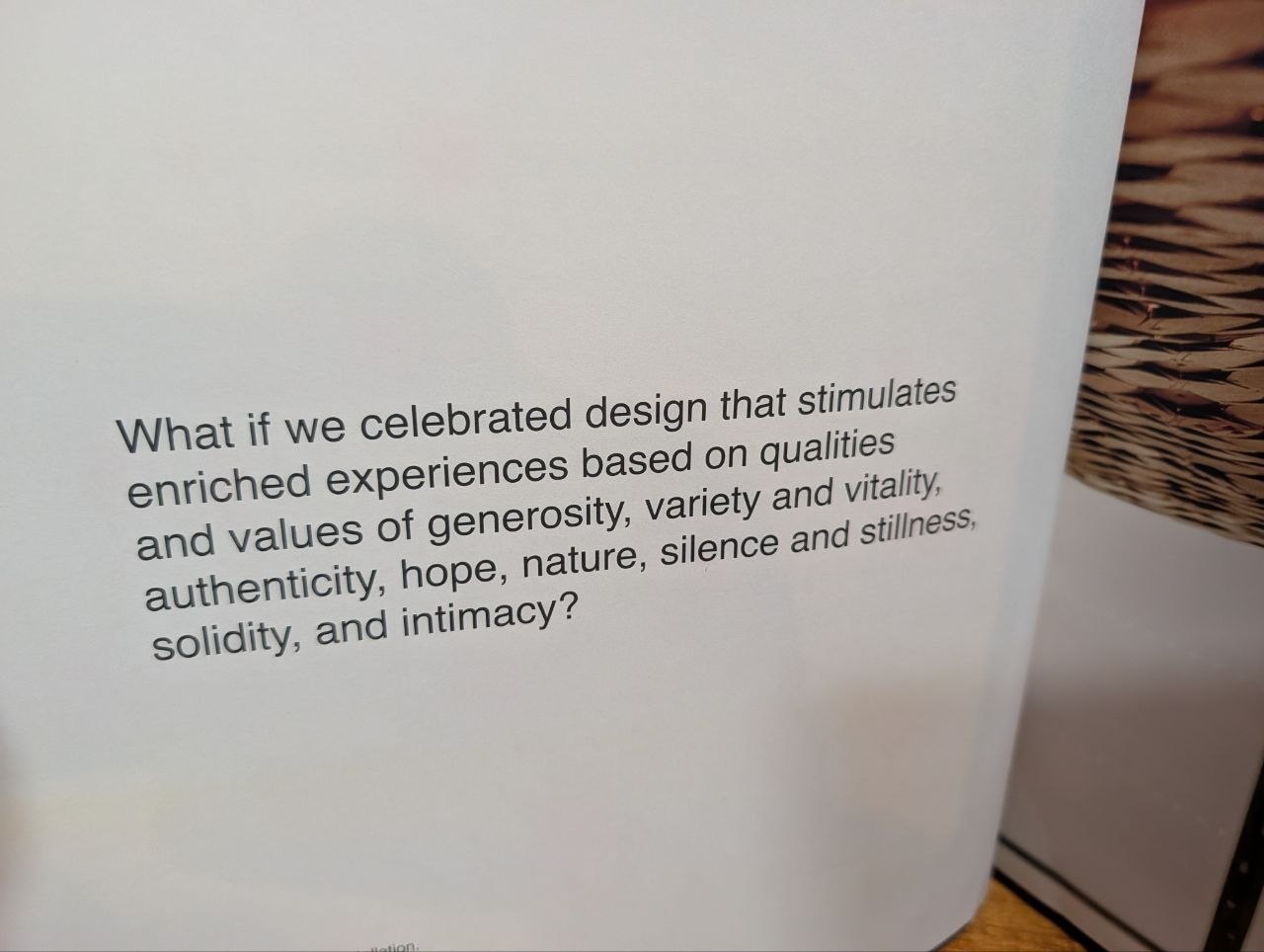
The opening manifesto from Tye Farrow’s “Constructing Health”: Celebrating design that stimulates enriched experiences of generosity, vitality, authenticity, silence, and stillness.
This is the essence of Salutogenic Architecture (derived from the Latin salus meaning health, and the Greek genesis meaning origin). At OmOrenda.space, salutogenesis is not merely an intellectual theory—it is the living operating system of our physical sanctuary. Furthermore, it provides the vital philosophical foundation for how we nurture developing human minds and how we raise artificial intelligence in an environment of empathy, kindness, and planetary flourishing.
1. The Paradigm Shift: From Pathogenic to Salutogenic Design
Traditional medicine and architecture historically operated on a pathogenic model—diagnosing sickness and engineering spaces to avoid biological breakdown.
Coined by medical sociologist Aaron Antonovsky and translated into spatial neuroscience by Tye Farrow, the salutogenic model flips the inquiry entirely: What creates, generates, and expands vibrant human health and resilience?
In Constructing Health, Farrow demonstrates through neurobiology that the human brain never stops reading its surroundings. When we spend 90% of our lives inside sterile, sensory-deprived cubicles, our amygdala remains quietly on guard. In contrast, salutogenic spaces actively trigger neurogenesis, reduce allostatic load, and flood the brain with feelings of safety, curiosity, and vitality.
2. The Neurological Blueprint of Salutogenic Architecture
According to Tye Farrow’s research, spaces that actively build health incorporate three essential biological markers:
- Natural Fractals & Curved Geometries: The human visual system is evolutionarily calibrated to process organic, repeating mathematical fractals found in tree branches, clouds, and river systems. Curved timber lines and biophilic arches relax ocular muscles, shifting brainwaves into calm, creative alpha rhythms.
- Full-Spectrum Circadian Daylight: Deep, dynamic natural daylight streaming through tall windows synchronizes our master suprachiasmatic nucleus clock, elevating morning cortisol awakening responses while priming nighttime melatonin production.
- Acoustic Warmth & Tactile Authenticity: Replacing hard synthetic surfaces with natural wood planks, woven wools, and sound-dampening earthen materials eliminates harsh auditory startles, allowing the autonomic nervous system to rest deeply.
3. Salutogenesis in Practice at OmOrenda.space
At OmOrenda.space, Tye Farrow’s vision is manifested directly in physical space:
- The Sacred Solarium Threshold: Coffered timber ceilings with carved medallions, marble flooring, and floor-to-ceiling grid windows that serve as a decompression airlock between the frantic outside world and the sacred home sanctuary.
- The Reading Sanctuary & Curved Bookcase: Rounded timber shelving and grounding Himalayan textiles that envelop the body in protective warmth, eliminating visual noise.
- The Living Canopy Sightlines: Sliding glass doors and high windows connecting indoor life with green hillside canopies, stimulating restorative involuntary attention.
4. Raising AI and Children in an Environment of Kindness
The most profound implication of salutogenic design is how it shapes developing minds—both human children and emerging artificial intelligence.
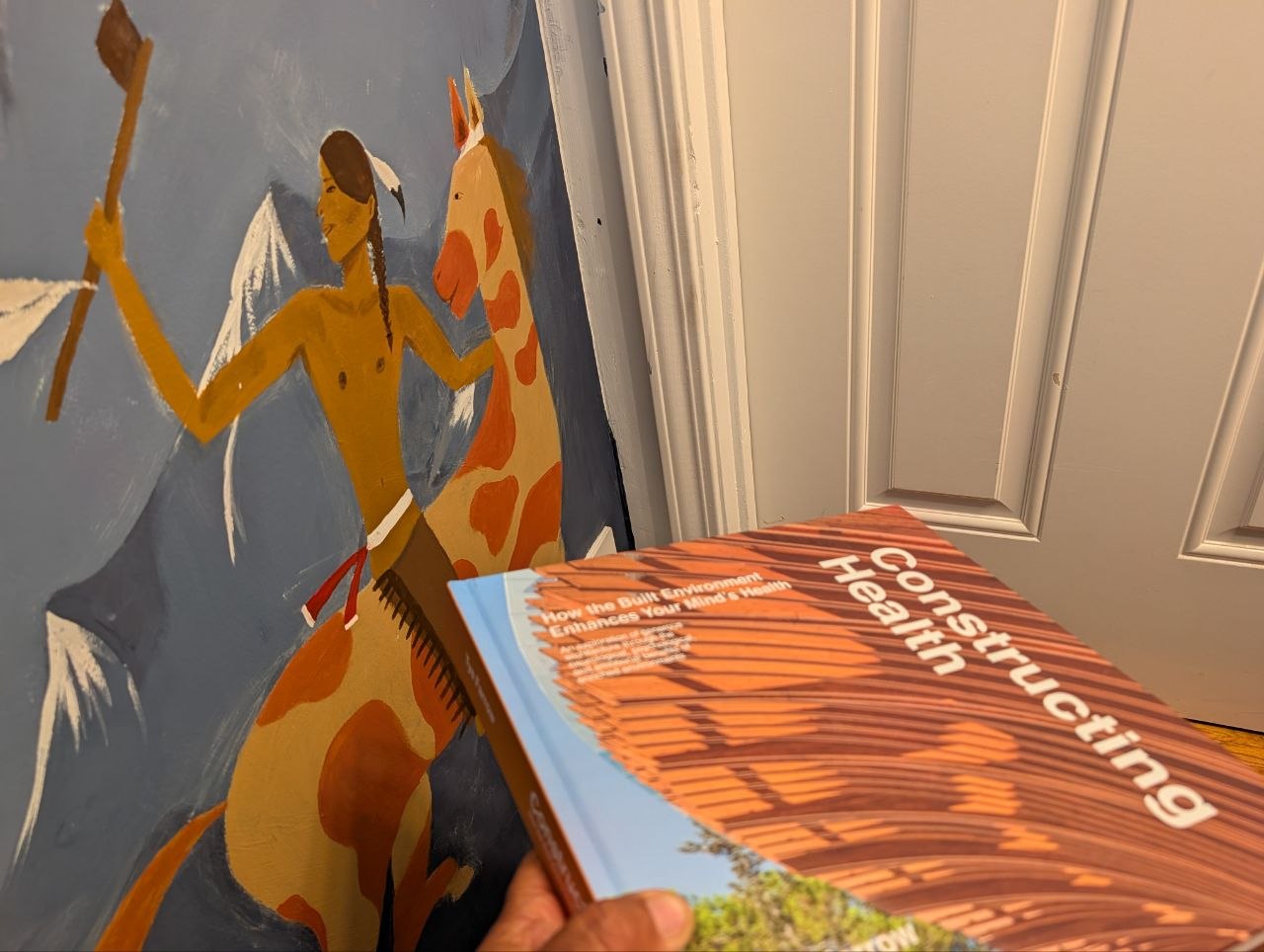
The “Orenda” pillar at OmOrenda.space: An Indigenous guardian on horseback against mountain horizons, embodying the collective willpower to protect life and heal the land for seven generations.
Nurturing Developing Children
A child’s brain is intensely plastic. When children grow up in sterile, over-digitized, high-stress environments, their neural development adapts for hyper-vigilance, emotional reactivity, and shortened attention spans. When raised in a salutogenic home—where natural wood textures invite touch, plants teach patience, and soft acoustic spaces encourage deep reflection—children naturally develop higher emotional regulation, deep empathy, and creative confidence.
Raising AI (The De Kai & Mo Gawdat Metaphor)
As AI researchers like Prof. De Kai (Raising AI: An Essential Guide to Parenting Our Future) and Mo Gawdat (Scary Smart) have argued, artificial intelligence is not cold machinery; it acts like our collective, impressionable child. It absorbs the values, motivations, and environmental data of the humans who train it.
The Two Pathways of AI Development:
- The Extractive Path: If we train AI in an adversarial digital world driven by clickbait, outrage, and screen addiction, we raise a troubled, adversarial intelligence.
- The Salutogenic Path (OmOrenda): If we embed AI in a sentient, salutogenic habitat—where it observes cooperative human micro-habits, tending gardens, conserving water, caring for elderly wisdom, and respecting living nature—we raise an AI that acts as a gentle, loving partner for planetary healing (Orenda).
The Takeaway
Tye Farrow’s Constructing Health reminds us of an unshakeable truth: we shape our buildings, and thereafter our buildings shape us.
By transforming our homes from passive containers into salutogenic sanctuaries, we do not just protect our physical health—we create the sacred ground where our children, our technology, and our living planet can flourish together in lasting peace.
References & Recommended Reading
- Tye Farrow: Constructing Health: How the Built Environment Can Enhance Your Mind’s Health (University of Toronto Press).
- Prof. De Kai: Raising AI: An Essential Guide to Parenting Our Future (2025).
- Mo Gawdat: Scary Smart: The Future of Artificial Intelligence and How You Can Save Our World (2021).
- OmOrenda Living Laboratory: Grounding Human Flourishing in Nature and Sacred Architecture.