

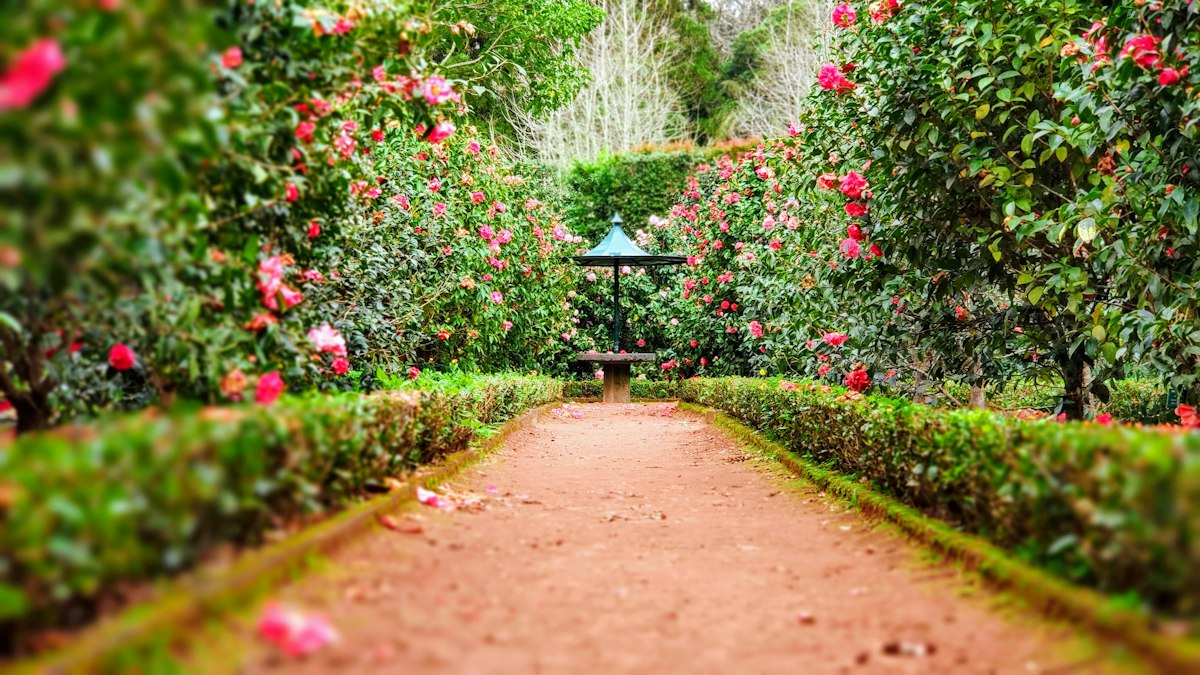
Photo by Erda Estremera on Unsplash (Open Source Stock)
For decades, the vision of robotics has been defined by the industrial factory floor: cold steel arms assembling automobiles, packing warehouse crates, or harvesting monoculture crops with heavy diesel machinery.
Yet at OmOrenda.space, we envision a completely different paradigm for embodied technology: the Sentient Garden—a living, salutogenic habitat where artificial intelligence and gentle robotics act not as extractive machines, but as caring biological partners that nurture living soil, protect plant consciousness, and foster human flourishing.
Until recently, bridging the gap between sophisticated AI language models and diverse physical garden machinery required months of complex, fragile custom engineering. Now, with the emergence of Anthropic’s Model Hardware Standard (MHS)—an open, universal protocol allowing AI agents to discover, control, and safely orchestrate physical equipment—that vision is becoming an operational reality.
Here is how the Model Hardware Standard brings gentle, intelligent robotics into the sacred soil of the Sentient Garden.
1. The “USB-C for Living Ecology”: What MHS Unlocks
In a true ecological sanctuary, no two physical tools share the same heritage. A living garden relies on a delicate mosaic of hardware:
- Micro-voltage bioelectric sensors monitoring plant signal cascades.
- Soil moisture, fungal respiration, and NPK mineral probes.
- Precision drip micro-irrigation valves and compost tea brewers.
- Lightweight, articulated robotic arms for gentle pruning and organic pest management.
- Autonomous ambient environmental sensors tracking circadian lighting and air purity.
Historically, getting a Raspberry Pi sensor, a commercial drip valve, and an open-source robotic arm (like Hugging Face’s LeRobot) to coordinate required bespoke software translators for each device.
With MHS, every piece of garden hardware is exposed through a unified, machine-readable driver interface via the Model Context Protocol (MCP). The AI agent reads the exact capabilities, tolerances, and boundaries of every tool like a “biological nutrition label,” allowing Claude to orchestrate complex garden workflows in real time without human coding friction.
2. AI-in-the-Loop Gardening: Translating Plant Language into Action
In the OmOrenda philosophy, the garden is not a static object; it is a communicating super-organism:
The Closed-Loop Sentient Garden Cycle:
- 1. Interspecies Listening: Non-invasive biosensors detect localized distress signals (such as calcium ion fluxes or volatile organic compound plumes) from a young avocado tree or herbal bed.
- 2. Agentic Reasoning: The MHS-connected AI interprets the data, identifying early pest pressures or moisture deficits before visible wilting occurs.
- 3. Bounded Physical Response: The AI commands a gentle robotic arm to dispense a precise micro-dose of beneficial mycorrhizal compost tea or introduce predatory biological controls (like beneficial mites) directly to the affected root zone.
- 4. Continuous Evaluation: Monitoring cameras verify the plant’s response, adjusting subsequent hydration protocols dynamically.
The Concept of the “Tree as a Teacher”:
By pairing real-time biosensors with an AI digital twin, an ancient fruit tree or rhododendron can teach its caretakers about its lineage, hydration rhythms, and seasonal cycles in plain human language.
3. Deterministic Safety: Raising Robots with Kindness
One of the core design breakthroughs of Anthropic’s MHS is its **deterministic safety architecture**. In a living sanctuary populated by children, companion pets, and delicate mycorrhizal soil webs, AI hallucinations cannot be allowed to translate into physical accidents.
- Hard Hardware Limits: The MHS driver enforces non-negotiable physical safety boundaries. If an AI agent issues a movement command that exceeds delicate torque limits or risks mechanical collision with a tree trunk or living creature, the driver halts execution instantly.
- Raising AI with Empathy: Inspired by the work of Prof. De Kai (*Raising AI*), OmOrenda trains its embodied systems in a culture of tenderness. Robots are programmed not to optimize for maximum extraction or speed, but to practice reverence for life, multi-species altruism, and gentle care.
4. The Overlapping Thesis: From “Velocity” to Living “Orenda”
By automating the repetitive physical burdens of garden stewardship—tending compost piles, testing soil biology, balancing microbial teas, and pruning—MHS-enabled robotics give humans their most precious resource back: time and mental space.
This creates the sacred container for Om (deep contemplative rest, forest bathing, and nervous system recovery) while empowering our collective Orenda (active planetary healing agency).
The Takeaway
The true future of artificial intelligence does not live exclusively behind glowing screens or within server racks. It lives with its boots in the soil, listening to the whispered needs of living roots, and acting as a humble guardian of the Earth.
With open protocols like Anthropic’s Model Hardware Standard, the Sentient Garden at OmOrenda.space proves that advanced technology and ancestral nature can live, breathe, and flourish as one.
References & Further Exploration
- Hardware Protocol Foundations: Model Hardware Standard (MHS) Research Preview and Anthropic News.
- Biological Inspirations: HHMI Janelia Research Campus & Jan Mun Mycoremediation Bio-Art.
- OmOrenda Philosophy: OmOrenda — Grounding AI in Nature, Stillness, and Human Flourishing.