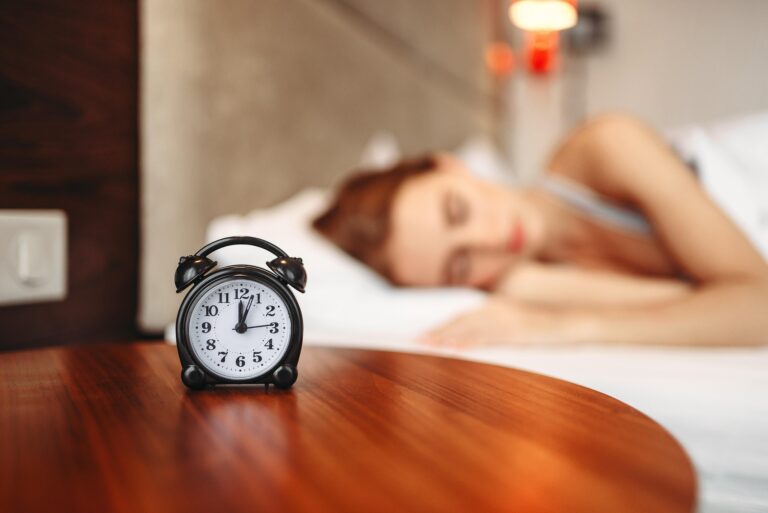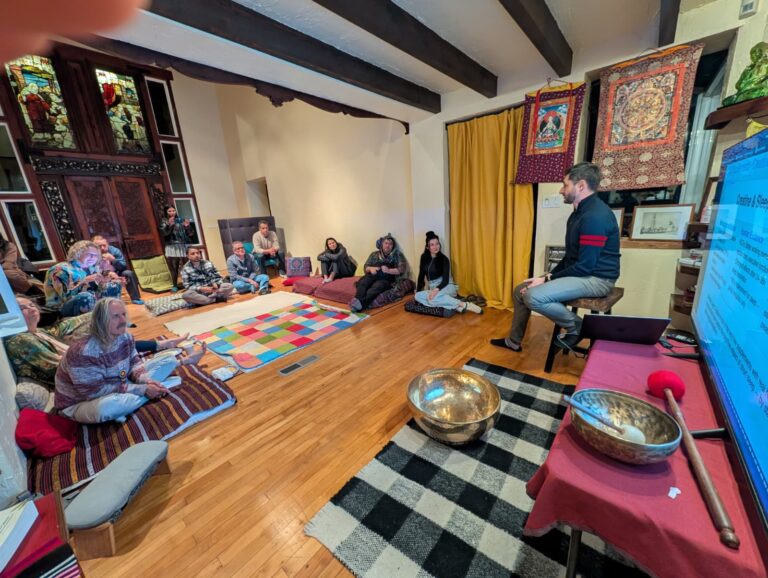

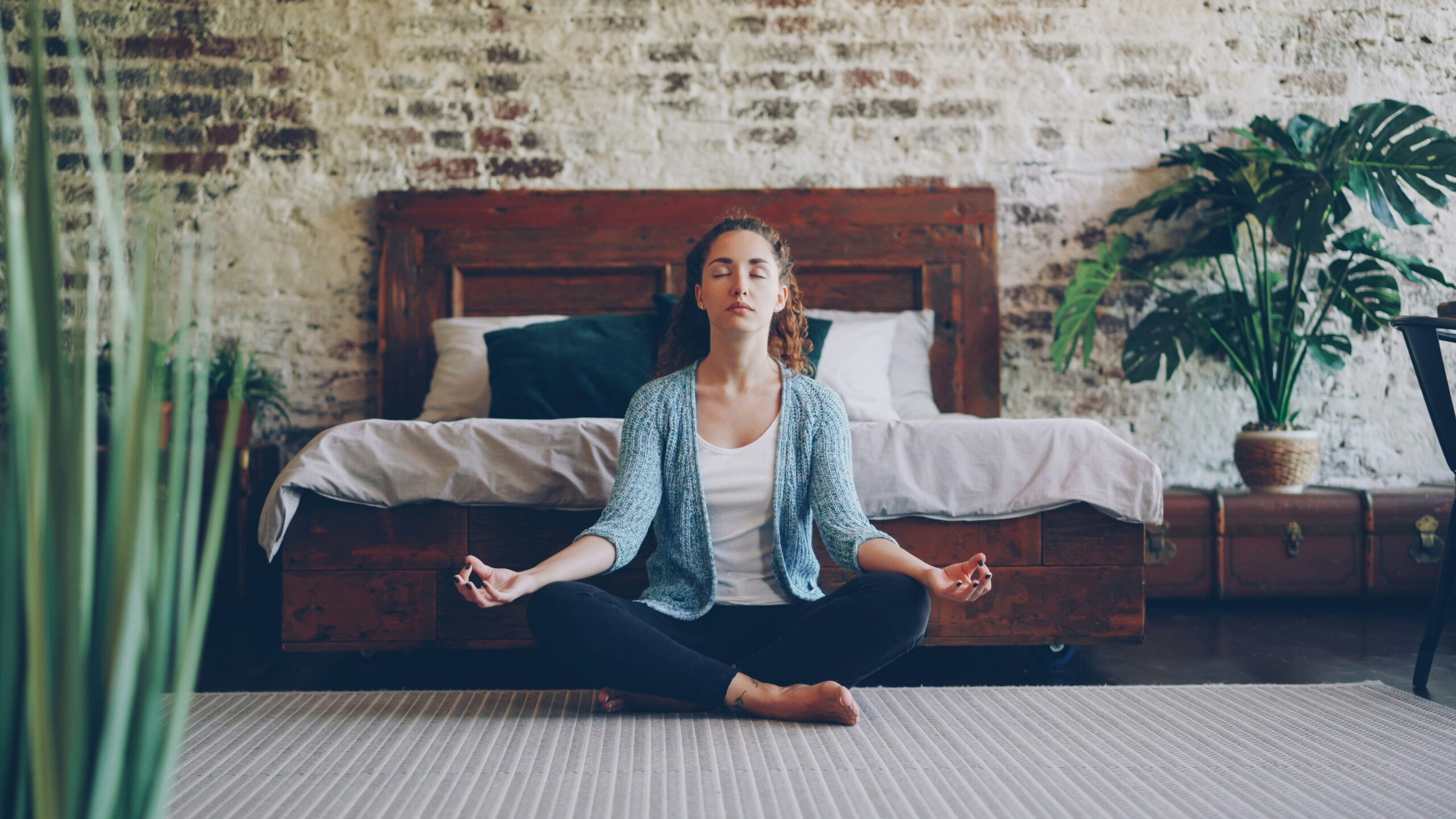
Sleep meditation is the practice of using mindfulness and relaxation techniques to calm the mind and body, facilitating the transition into restful sleep. It is a key component of sleep therapy and works beautifully alongside sleep hygiene practices Unlike sleep medications, which chemically induce drowsiness, sleep meditation works by activating the parasympathetic nervous system-your body’s natural “rest and digest” mode-making it easier to fall asleep and stay asleep throughout the night. The key techniques include deep breathing (4-7-8 method), progressive muscle relaxation, body scan meditation, guided imagery, and counting meditation.
In this guide, you’ll learn:
- The science behind why meditation helps you sleep
- Step-by-step instructions for 6 proven sleep meditation techniques
- How to create the ideal environment for sleep meditation
- Common mistakes to avoid
- How to build a sustainable meditation practice
Key Takeaways
- Sleep meditation activates the parasympathetic nervous system, reducing the “fight-or-flight” response that often prevents sleep
- Research shows meditation can significantly reduce the time it takes to fall asleep and improve overall sleep quality
- Progressive muscle relaxation, breathing techniques, body scans, and guided imagery are among the most effective approaches
- Consistency is more important than duration-even 10 minutes daily can yield significant improvements over time
- The ideal time for sleep meditation is 30-60 minutes before bed, as part of a winding-down routine
- Unlike sleep medications, meditation creates lasting improvements without dependency or side effects
- Combining multiple techniques (breathing + progressive relaxation) often produces better results than single approaches
Introduction
The modern mind is rarely quiet. Racing thoughts, to-do lists, worries about tomorrow-these mental activities keep our sympathetic nervous system (fight-or-flight) activated, making the transition to sleep remarkably difficult.
Sleep meditation offers a solution by actively calming this stress response. Instead of forcing sleep (which paradoxically increases alertness), meditation creates the conditions for sleep to arrive naturally.
Expert Insight: “While sleep trackers have undeniably advanced, providing powerful insights into our nightly rest, there’s a growing risk of ‘orthosomnia’ – the obsession with achieving perfect sleep scores. Sleep isn’t a competition, nor merely a metric to optimize; it’s a profoundly human experience that goes beyond data points.”
- Dr. Martin Kawalski, MD, PhD, Stanford University
The beauty of sleep meditation is its accessibility. You don’t need special equipment, expensive subscriptions, or years of practice. Even beginners can experience significant benefits within days or weeks of consistent practice.
The Science: Why Meditation Works for Sleep
The Nervous System Connection
When you’re stressed or anxious, your body produces cortisol and adrenaline-hormones designed for immediate survival, not restful sleep. These chemicals increase heart rate, elevate blood pressure, and keep your brain alert.
Meditation triggers the opposite response: activation of the parasympathetic nervous system, sometimes called the “rest-and-digest” or “feed and breed” system. This response:
- Slows heart rate
- Lowers blood pressure
- Reduces muscle tension
- Decreases cortisol levels
- Slows brain wave activity
This technique, developed by Dr. Andrew Weil, uses specific breath ratios to activate the parasympathetic nervous system. Rather than forcing sleep, these techniques create the conditions for sleep to arrive naturally.
What the Research Shows
Multiple studies demonstrate meditation’s effectiveness for sleep:
| Study | Finding |
|---|---|
| JAMA Internal Medicine (2015) | Mindfulness meditation improved sleep quality in older adults |
| Frontiers in Human Neuroscience (2017) | Meditation increased slow-wave sleep (deep, restorative sleep) |
| Sleep (2019) | Meditation practitioners fell asleep faster and slept more efficiently |
| Harvard Medical School | Meditation may be as effective as sleep medication for some people |
The mechanisms are clear: meditation reduces rumination, decreases physiological arousal, and builds the mental habits that support healthy sleep.
6 Proven Sleep Meditation Techniques
Technique 1: Deep Breathing (4-7-8 Method)
This technique, developed by Dr. Andrew Weil, uses specific breath ratios to activate the parasympathetic nervous system.
How to Practice:
- Lie down comfortably with eyes closed
- Exhale completely through your mouth, making a “whoosh” sound
- Close your mouth and inhale quietly through your nose for 4 counts
- Hold your breath for 7 counts
- Exhale completely through your mouth for 8 counts (make the whoosh sound)
- This completes one breath cycle
- Repeat for 4 cycles (work up to 8 over time)
Why It Works: The extended exhalation is key-it stimulates the vagus nerve, directly activating the parasympathetic nervous system.
Pro Tip: If 7 counts is difficult initially, start with shorter holds and build up gradually.
Technique 2: Box Breathing
Used by Navy SEALs to stay calm under pressure, box breathing is excellent for quieting a racing mind.
How to Practice:
- Inhale through your nose for 4 counts
- Hold your breath for 4 counts
- Exhale through your mouth for 4 counts
- Hold empty for 4 counts
- Repeat for 4-8 cycles
Why It Works: The equal counts create balance and focus, while holding your breath after exhale maximizes the relaxation response.
Technique 3: Progressive Muscle Relaxation (PMR)
This technique systematically tenses and releases muscle groups, teaching your body the difference between tension and relaxation.
How to Practice:
- Lie down comfortably, starting with your feet
- Inhale and curl your toes tightly (5 seconds)
- Exhale and release (10 seconds)
- Move to your calves: inhale and point toes, exhale and release
- Continue up through your body:
- Thighs
- Stomach
- Chest
- Hands (make fists)
- Arms (bend elbows, tense biceps)
- Shoulders (raise toward ears)
- Face (scrunch, then relax)
- By the end, your entire body should feel heavy and relaxed
Why It Works: Physical tension often goes unnoticed. PMR brings awareness to tension patterns and provides immediate relief.
Technique 4: Body Scan Meditation
This technique brings non-judgmental awareness to different parts of your body, promoting relaxation through presence.
How to Practice:
- Lie down comfortably with eyes closed
- Take 3 deep breaths to settle in
- Bring awareness to your toes-notice any sensations without trying to change them
- Slowly move your attention up through your body:
- Feet and ankles
- Calves and knees
- Thighs and hips
- Lower back and abdomen
- Chest and upper back
- Hands and arms
- Shoulders and neck
- Face and scalp
- Spend 10-30 seconds on each area
- When you reach the top, let your awareness fill your entire body
Why It Works: The focused attention breaks the cycle of worried thinking while the slow pace induces relaxation.
Technique 5: Guided Imagery
This technique uses mental visualization to create a sense of peace and safety.
How to Practice:
Choose a peaceful scene-real or imagined-and engage all your senses:
The Beach Scene:
- Imagine walking along a quiet beach
- Feel the warmth of the sun on your skin
- Hear the rhythm of waves
- Smell the salt air
- Taste the fresh breeze
- Notice the sand beneath your feet
- Find a comfortable spot and settle in
- Watch the waves slowly come and go
The Forest Scene:
- Imagine walking through a peaceful forest
- Sunlight filters through the trees
- You hear birdsong and rustling leaves
- The air is fresh and clean
- You find a soft clearing and lie down
- Moss and leaves cushion you
- You feel completely safe and at peace
Why It Works: Guided imagery engages the same brain regions as real experiences, creating genuine physiological relaxation.
Technique 6: Counting Meditation
Sometimes the simplest approaches work best. Counting provides a focus point that quiets mental chatter.
How to Practice:
Option A – Counting Down:
- Start at 100
- With each exhale, count down one number
- If your mind wanders, gently return to your last number
- Continue until you reach 0 (or fall asleep)
Option B – 4-7-8 Counting:
- Inhale for 4 counts
- Hold for 7 counts
- Exhale for 8 counts
- Repeat
Option C – Body Counting:
- As you exhale, mentally scan from head to toe
- Say “re” on the inhale, “lax” on the exhale
- “Re-lax… re-lax… re-lax”
Why It Works: Counting gives your mind a simple task that prevents it from spiraling into anxious thoughts.
Creating Your Ideal Sleep Meditation Practice
Setting Up Your Environment
The right environment enhances meditation effectiveness:
| Element | Recommendation |
|---|---|
| Temperature | Cool (65-68°F / 18-20°C) |
| Lighting | Complete darkness or dim amber light |
| Sound | White noise, nature sounds, or silence |
| Comfort | Supportive mattress, comfortable pillows |
| Distractions | Phone off or in airplane mode |
| Scent | Lavender (optional) |
When to Practice
Timing matters:
- 30-60 minutes before bed is ideal
- After your winding-down routine
- Before screens (or use blue light blocking)
- Same time each night builds habit
Duration
| Goal | Recommended Duration |
|---|---|
| Beginner | 5-10 minutes |
| Established practice | 15-20 minutes |
| Deep relaxation | 20-30 minutes |
Key Principle: Consistency matters more than length. 10 minutes daily beats 60 minutes sporadically.
How to Position
- Supine (on your back) is best for full body relaxation
- Arms at sides, palms facing up
- Pillow under knees if lower back is uncomfortable
- Cervical pillow if neck strain occurs
Common Mistakes to Avoid
Mistake 1: Trying Too Hard
The harder you try to relax, the more tense you become. Meditation isn’t about forcing a particular state-it’s about allowing relaxation to happen.
Solution: Let go of expectations. If you don’t feel relaxed, that’s okay. The practice still works.
Mistake 2: Expecting Immediate Results
Like any skill, meditation improves with practice. Don’t judge your first attempts.
Solution: Commit to 2-3 weeks before evaluating effectiveness.
Mistake 3: Using Your Phone
The blue light and mental stimulation from phones counteracts relaxation.
Solution: Use dedicated meditation devices or physical CD players. If using phone apps, enable airplane mode.
Mistake 4: Skipping the Foundation
Deep breathing before other techniques enhances their effectiveness.
Solution: Always start with 3-5 deep breaths to activate the relaxation response.
Mistake 5: Judging “Failed” Meditation
If you fall asleep during meditation, that’s not failure-that’s success! Many people use meditation specifically to fall asleep.
Solution: Consider any time in a meditative state as beneficial, regardless of whether you “completed” the practice.
Combining Techniques for Maximum Effect
The most effective approach often combines multiple techniques:
The Complete Sleep Meditation Routine (20 minutes)
- Preparation (2 min): Get comfortable, dim lights, ensure quiet
- Deep Breathing (3 min): 4-7-8 breathing to activate relaxation
- Progressive Relaxation (8 min): Release tension from toes to head
- Body Scan (5 min): Non-judgmental awareness of sensations
- Guided Imagery (2 min): Settle into peaceful visualization
- Surrender (remaining time): Let go and allow sleep to come
The Quick Sleep Routine (5-10 minutes)
- Box Breathing (3 min): Equal counts to balance nervous system
- Body Scan (3 min): Brief scan from head to toe
- Counting (2-4 min): Count down from 100
Apps and Resources
While not required, these tools can support your practice:
| App | Best For |
|---|---|
| Headspace | Beginners, animated guidance |
| Calm | Guided sleep stories |
| Insight Timer | Free meditations, timer function |
| 10% Happier | Skeptics, busy professionals |
| The Nightly | Sleep-specific meditations |
Many apps offer free versions with sufficient features for beginners.
When Sleep Meditation Isn’t Enough
Sleep meditation helps most people, but it’s not a substitute for professional care if you experience:
- Chronic insomnia lasting more than 3 months
- Loud snoring or breathing pauses during sleep
- Excessive daytime sleepiness despite adequate sleep
- Restless legs or uncomfortable sensations
- Anxiety or depression affecting sleep
In these cases, consult a sleep specialist. Cognitive Behavioral Therapy for Insomnia (CBT-I) combines meditation principles with additional techniques and is the gold-standard treatment for chronic insomnia. Understanding your circadian rhythm can also help you time your meditation practice for maximum benefit
Conclusion
Sleep meditation offers a gentle, effective path to better rest. Unlike sleeping pills, it creates lasting improvements without dependency. Unlike sleep hygiene alone, it addresses the mental patterns that keep us awake.
Start simply. Choose one technique, practice it for 10 minutes each night, and notice the difference. For a more holistic approach to sleep improvement, meditation is just one piece of the puzzle
Remember: your body knows how to sleep. Meditation simply removes the barriers.
Frequently Asked Questions
How long does it take for sleep meditation to work?
Many people experience immediate relaxation from their first session. For lasting improvements in sleep quality, consistent practice over 2-4 weeks typically shows measurable benefits.
Can I do sleep meditation while in bed?
Yes. In fact, doing meditation in the same place where you sleep can create a mental association between that space and relaxation. Just ensure you’re lying comfortably with the intention to rest, not to scroll on your phone.
What if I can’t stop thinking during meditation?
Thinking is normal-the goal isn’t to stop thoughts but to change your relationship to them. When you notice thoughts arising, gently return your attention to your technique. Each return strengthens your focus muscle.
Is it okay to fall asleep during meditation?
Absolutely. Falling asleep means the meditation worked! Many people use meditation specifically to help them fall asleep. If staying awake is important to you, try sitting up slightly or using a meditation that includes prompts.
Do I need to meditate every night for it to work?
Consistency matters, but nightly practice isn’t mandatory. Even 3-4 nights per week can yield significant benefits. However, daily practice builds stronger habits and faster results.
Can I combine meditation with other sleep techniques?
Yes. Sleep meditation complements sleep hygiene, breathing exercises, and other relaxation techniques. Many find that combining approaches-especially meditation with progressive muscle relaxation-produces the best results. You can also explore natural sleep remedies like magnesium or herbal teas to support your practice
What’s the best sleep meditation for anxiety?
Body scan meditation and 4-7-8 breathing are particularly effective for anxiety because they directly calm the nervous system. Guided imagery focused on safety and peace can also help quiet anxious thoughts.
Related Reading
- Sleep Therapy: A Complete Guide – Understanding broader sleep approaches
- Sleep Hygiene: 15 Science-Backed Tips – Daily habits for better sleep
- Circadian Rhythm: Your Body’s Internal Clock – Aligning with natural rhythms
- Natural Sleep Remedies That Actually Work – Complementary approaches
- How to Improve Sleep Quality Naturally – Holistic strategies
Expert Attribution
Dr. Martin Kawalski is a Stanford-trained sleep science expert specializing in behavioral sleep interventions. He emphasizes the connection between mental relaxation and physiological sleep readiness.
Learn more about Dr. Kawalski’s approach at Omorenda.Space Experts.