
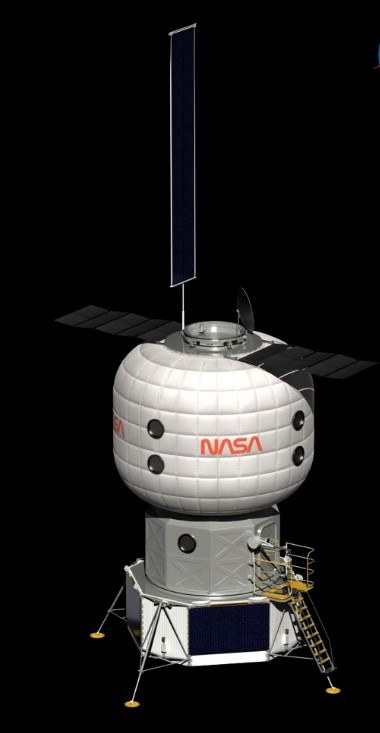
Public domain concept rendering by NASA: The Lunar Surface Habitat, designed to support prolonged scientific exploration and crew rotations on the moon.
When Apollo astronauts stepped onto the lunar surface more than fifty years ago, human spaceflight was characterized by a brief technological sprint. Humanity proved it could traverse the celestial void, plant a flag, collect geological core samples, and return safely home. Yet once that geopolitical milestone was achieved, the lunar frontier remained quiet for generations.
Speaking to students at the University of Central Florida, NASA Administrator Jared Isaacman announced a profound transformation in space exploration. NASA is no longer planning momentary visits. The agency is dedicating its resources toward building the workforce, robotic cadence, and infrastructure necessary to establish an enduring, permanent human presence on the moon.
“We are going back to the moon,” Isaacman proclaimed. “We aren’t just going for the flags and footprints.”
This commitment represents a watershed moment in the story of human exploration. However, sustaining human life on the moon for months or years presents challenges that purely mechanical engineering cannot solve alone. It requires a fundamental shift toward Bioregenerative Life Support Systems (BLiSS) and regenerative biological design. Here, the experimental living research and salutogenic architecture developed at the OmOrenda hub offer crucial blueprints for the future of off world habitats.
The Step by Step Architecture: From FLIP Rover to Artemis IV
Establishing a permanent habitat on an airless celestial body exposed to deep space radiation, micro meteorites, and two week long freezing lunar nights cannot happen overnight. Isaacman emphasized that NASA is following a deliberate, cumulative progression:
“We didn’t just jump to Apollo 11,” Isaacman explained. “We had the Mercury program, Gemini program and a lot of Apollo missions before the Eagle ultimately landed. We need to do the same thing.”
1. Robotic Cadence
Near monthly robotic missions delivering rovers, landers, and scientific instrumentation to thoroughly map and prepare lunar landing zones.
2. Closed Loop BLiSS
Converting metabolic wastewater, solid organic streams, and air into potable water, plant nutrients, oxygen, and biomanufactured calories.
3. Salutogenic Sanctuaries
OmOrenda biophilic architecture: integrating living plants, circadian daylighting, natural textures, and acoustic rest pods for the nervous system.
4. Contemplative Regulation
Yoga Nidra, vagal nerve restoration, and mindfulness practices ensuring deep cognitive resilience and social cohesion across prolonged isolation.
The methodical lunar campaign encompasses multiple interlocking phases:
- Robotic Proving Grounds: The operational push begins with uncrewed landers carrying the FLIP rover to prospect polar water ice deposits and test landing gear, gradually accelerating toward a near monthly cadence of robotic cargo flights.
- Artemis III Orbital Rehearsal (2027): Astronauts will practice complex docking operations with commercial lunar landers in low Earth orbit, rigorously validating life support integration before venturing into deep space.
- Artemis IV Surface Landing (2028): Marked as the agency’s planned crewed landing under the current schedule, beginning multi week surface stays and assembling the foundational elements of the Lunar Surface Habitat.
- Deep Space Horizons: Complementing the lunar base, NASA is advancing the Nancy Grace Roman Space Telescope to discover exoplanets, the NEO Surveyor for asteroid defense, Dragonfly to explore Saturn’s organic moon Titan, and nuclear thermal spacecraft designed to deploy three exploration helicopters to Mars.
Why Physical Chemical Systems Fail: The Imperative for NASA BLiSS
For more than twenty six years aboard the International Space Station, environmental control has relied primarily on physical chemical systems. These machines filter air, scrub carbon dioxide, and recycle urine into potable water. Yet, physical chemical systems are not truly regenerative:
- Constant Resupply Dependency: The space station requires endless cargo resupply runs from Earth, delivering nitrogen, oxygen tanks, fresh water, and freeze dried meals.
- Wasted Resources: Solid human metabolic waste, brines, and organic packaging cannot be recycled by physical chemical systems; they are either incinerated in Earth’s atmosphere upon reentry or discarded, an impossible luxury on a lunar base.
- Mission Thresholds Exceeding 120 Days: NASA trade studies demonstrate that for lunar and Martian missions lasting longer than 120 days, physical chemical systems become economically and logistically unviable.
To overcome this barrier, NASA’s Mars Campaign Office and Advanced Exploration Systems established the Bioregenerative Life Support Systems (BLiSS) project. Partnering with universities like Texas Tech, South Florida, and North Dakota, BLiSS utilizes biological organisms: anaerobic phototrophic membrane bioreactors, microalgae, and microbial consortia to convert waste streams into valuable biological assets:
- Resource Upcycling: Specialized bioreactors transform wastewater into clean water, convert human solid waste into organic fertilizer, and harvest nutrient solutions to feed crops and edible microalgae.
- Atmospheric Balancing: Microbes and plants produce breathable oxygen while capturing excess carbon dioxide, creating a self sustaining circular bio economy.
- Analog Habitat Proving Grounds: Under the BioWaTERR project, BLiSS deployable wastewater treatment systems were integrated into the University of North Dakota’s Integrated Lunar Mars Analog Habitat (ILMAH), running live tests with human crews through 2028.
How OmOrenda Hub Research and Experimental Learning Empowers BLiSS
While NASA BLiSS focuses on the mechanical and microbial machinery of bioregeneration, prolonged space living requires addressing the complete organism: the human nervous system, psychological resilience, and habitat sensory health. This is precisely where the pioneering research, salutogenic architecture, and experimental learning conducted at the OmOrenda hub provide vital, missing solutions.
1. Salutogenic Biophilic Habitat Architecture
In standard space habitat engineering, living quarters are treated as sterile metal cylinders filled with exposed conduits, flashing indicators, and constant mechanical noise. This chronic sensory deprivation induces autonomic dysregulation, sleep disturbances, and elevated cortisol.
At the OmOrenda hub, inspired by the salutogenic design principles of architect Tye Farrow and the Chhauni sanctuary in Nepal, research demonstrates that built environments must actively produce health. Integrating living plants directly into the architectural envelope does more than purify air: it introduces essential visual fractals, organic aromas, and biophilic tactile stimuli that stabilize the parasympathetic nervous system. For lunar and Martian habitats, blending BLiSS plant growth chambers with salutogenic living spaces transforms utilitarian survival pods into restorative sanctuaries.
2. Autonomic Recovery and Non Sleep Deep Rest (Yoga Nidra)
Astronauts in deep space experience extreme circadian disruption, witnessing multiple orbital sunrises or enduring weeks of lunar darkness. High operational stress and microgravity elevate sympathetic fight or flight tone, compromising immune function and cognitive performance.
The OmOrenda hub has conducted extensive experimental learning into autonomic recovery techniques, particularly Yoga Nidra and Non Sleep Deep Rest (NSDR). Research confirms that structured rapid visualization and body awareness in hypnagogic theta states lower heart rate variability stress markers, accelerate cellular repair, and discharge accumulated cognitive debt. Teaching these contemplative techniques to long duration crews offers an indispensable non pharmacological protocol for mental health and autonomic homeostasis in deep space.
3. Closed Loop Soil Microbiome and Plant Ecology
BLiSS research relies heavily on cultivating crops in closed biological loops. The living soil research and organic biological stewardship conducted at OmOrenda: including our work on beneficial organism integration, diverse rhizosphere microbiota, and natural nutrient cycles: offers valuable practical insights for maintaining resilient, disease resistant agricultural systems in off world regolith habitats.
Decentralized Stewardship: Open Source Blueprints and Blockchain Value Sharing
Sustaining living habitats across long horizons, whether in Redwood City, the high Himalayas, or at the lunar South Pole, requires an economic and governance architecture that prevents resource extraction and centralized monopolies. If a single corporation owns the blueprints for clean air, water recycling, and psychological health, long term habitats become vulnerable to price gouging, proprietary lock in, and systemic fragility.
To ensure regenerative living scales ethically, OmOrenda pairs an open source knowledge commons with blockchain enabled value creation and fair sharing.
1. Turning Ecological Regeneration into Shared Value on Chain
Conventional corporate accounting treats clean air, fertile living soil, and human nervous system recovery as invisible externalities: things that possess immense real world value but are ignored because they do not appear on a quarterly financial balance sheet.
Within the OmOrenda framework, this invisible value becomes measurable and verifiable through three everyday technologies:
- Ambient Internet of Things (IoT) Sensors: In simple terms, smart connected monitors that continuously measure air purity, oxygen levels, humidity, and water circulation in real time without human intervention.
- Plant Bio Electric Digital Twins: A digital twin is a computer simulation that mirrors a physical living system. By reading the subtle electrical signals of plants and soil microbes, the computer can tell whether the indoor forest is thriving, thirsty, or absorbing carbon, just like a virtual living heartbeat.
- Consented Wearable Telemetry: Anonymized biometric readings from smart rings, watches, or EEG headbands tracking Heart Rate Variability (HRV) and deep sleep stages, providing empirical proof that a sanctuary’s environment actively reduces stress and restores cognitive health.
Smart contracts: self executing digital agreements that run transparently on a blockchain without middlemen: automatically translate this verified biological telemetry into fair, programmable value distribution:
- Proof of Regeneration and Yield Sharing: When a community garden or indoor vertical farm reaches verifiable ecological milestones, such as producing a bountiful organic harvest or recycling organic compost, the smart contract mints impact and yield tokens. Instead of profits flowing to outside speculators, value is automatically routed directly to the gardeners, hosts, and stewards who nurture the living ecosystem.
- Cross Node Reciprocity (From California to Nepal): When guests, researchers, or ethical AI developers book a residency at Node 1 in California or license longitudinal telemetry, automated smart contracts immediately route a portion of proceeds to sister sanctuaries in Nepal and local biodiversity restoration funds. This embodies the ancient Indigenous principle of reciprocity: wealth earned in one sanctuary directly strengthens the entire network.
- Decentralized Science (DeSci) and Sovereign Telemetry: In traditional science, valuable health and biological data is locked inside expensive, closed academic paywalls or corporate vaults. Through Decentralized Science (DeSci), health and environmental data is preserved on open, decentralized data layers. Space agencies like NASA and longevity medical researchers can license verified, privacy preserved datasets while royalties flow directly back to the original sanctuary community.
2. Decentralizing the Habitat Through Open Source Commons
True resilience on Earth or the Moon cannot depend on a single proprietary company. If a lunar habitat’s oxygen recycling unit or water filter breaks, astronauts cannot wait months for an Earth vendor to send an expensive proprietary replacement. They need open, standardized blueprints they can 3D print and repair themselves on site.
Rather than operating as a closed, secretive franchise, OmOrenda is built as a federated, open source reference architecture freely accessible to anyone:
- Open Hardware and Bioregenerative Schematics: Complete Bills of Materials (the exact ingredient list of hardware parts), sensor code, indoor hydroponic setups, and bio weathering mineral rock setups are published openly. Any university space analog, community greenhouse, or lunar research base can download, build, and adapt the designs without paying licensing fees.
- Standardized OpenTelemetry and Digital Twin APIs: Open data standards permit independent habitats worldwide to run local plant digital twins and AI wellness assistants while communicating across a shared, collective learning network. When a community in Japan discovers an optimal lighting spectrum for growing strawberries indoors, an analog habitat in Arizona can immediately benefit from that knowledge.
- Open Salutogenic and Contemplative Protocols: Step by step guided Yoga Nidra scripts, circadian lighting spectrum profiles, and vagal nerve regulation protocols are shared under open licenses. Psychological resilience, deep rest, and mental peace are treated as a universal human commons rather than a luxury commodity.
Any eco sanctuary, educational farm, or off world research base that adopts these open standards and meets verifiable ecological benchmarks can plug in as an autonomous federated node: governing research funds and software upgrades democratically rather than through top down corporate control.
The OmOrenda Vision: Expanding Conscious Kinship to the Stars
Humanity’s journey to the moon represents far more than an outward expansion of technology; it represents an inward evolution of consciousness.
The Stillness of Om (The Cosmological Overview)
When astronauts look back from the lunar surface, they witness Earth as a radiant, borderless jewel surrounded by infinite quietude. This perspective embodies the realization of Om: the primordial understanding that all life is intimately unified. Establishing a permanent lunar base gives humanity a permanent reminder of our shared origin and the fragility of our planetary home.
The Active Agency of Orenda (Ethical Stewardship of New Worlds)
In Indigenous Haudenosaunee philosophy, Orenda is the active spiritual energy that binds conscious beings to ethical action. As we venture across the celestial expanse, we must carry forward the highest standards of stewardship. We must not export exploitation, territorial division, or environmental neglect to other worlds. Instead, our presence in space must be founded on reverence, circular ecological harmony, and universal flourishing.
By uniting NASA’s rigorous engineering and BLiSS bioregenerative technology with OmOrenda’s salutogenic design and contemplative wisdom, we can ensure that our future among the stars is healthy, enduring, and deeply human.
References and Further Reading
- Alex Cook, NASA chief tells UCF students they could help build a moon base, ClickOrlando / WKMG News 6, November 2026.
- National Aeronautics and Space Administration (NASA), Bioregenerative Life Support Systems (BLiSS) Project, NASA TechPort, Mars Campaign Office.
- L. Roberson et al., NASA BLiSS and BioMFG: Using Microbes for Space Exploration, NASA Technical Reports Server.
- O. Monje et al., Staged Evolution of BLiSS Technologies for Moon to Mars Architecture, NASA Technical Reports.
- Tye Farrow, Constructing Health: How the Built Environment Enhances Your Mind’s Health, University of Toronto Press.
- National Aeronautics and Space Administration (NASA), Open Source Science Initiative (OSSI), Science Mission Directorate.
- Cloud Native Computing Foundation (CNCF), OpenTelemetry Specification for Distributed Sensor and System Observability.
- Decentralized Science (DeSci) and Regenerative Finance (ReFi) Working Groups, Open Protocols for Verifiable Ecological Telemetry and Programmable Commons.