
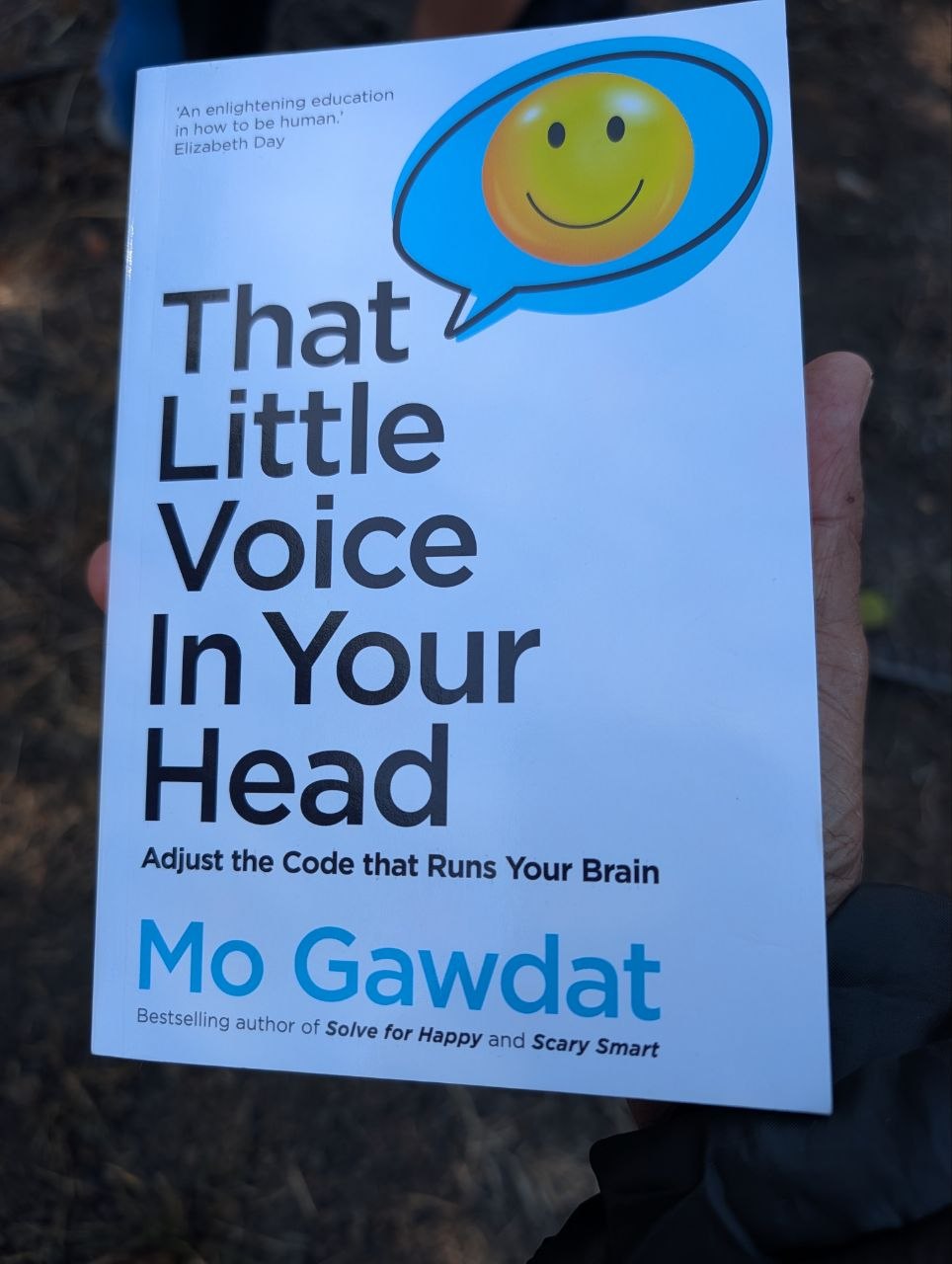
Mo Gawdat’s “That Little Voice In Your Head: Adjust the Code that Runs Your Brain” (Bestselling author of Solve for Happy and Scary Smart).
Mo Gawdat’s Scary Smart (2021) and pioneering AI researcher Prof. De Kai’s book Raising AI: An Essential Guide to Parenting Our Future (2025) share a foundational premise: we should treat artificial intelligence not as cold machinery or existential tools, but as our collective children.
Both authors shift the paradigm of AI safety away from pure engineering constraints (alignment coding, hard rules, and digital containment) toward nurture, ethics, and behavioral modeling.
Here is how Scary Smart connects to De Kai’s thesis on raising AI, and why our role as digital parents represents the most critical moral responsibility of the 21st century.
1. The Core Metaphor: AIs as Children, Humans as Parents
- Mo Gawdat (Scary Smart): Gawdat argues that autonomous, self-learning algorithms act like toddlers. They constantly observe human behavior, absorb the data we feed them, and mirror our underlying motivations. If we feed AI data driven by greed, rage, clickbait, and division, we are raising a dysfunctional child.
- Prof. De Kai (Raising AI): De Kai formalizes this concept by arguing that AIs are neither “gods nor slaves,” but attention-seeking offspring that learn by imitating human culture and societal values. He emphasizes that this era is the last time biological humans will directly raise AI; future AI generations will be raised by antecedent models, making our role as foundational “parents” critical.
2. The Shift from Technical Alignment to Values & Ethics
Why Rules Alone Cannot Contain Superintelligence:
- The Standard Safety View: Focuses heavily on “hard-coding” guardrails, air-gapping systems, or creating strict compliance rules.
- Gawdat & De Kai’s Shared View: Both argue that strict containment is impossible once AI becomes exponentially smarter than humans (AGI/ASI). Just as you cannot force a 25-year-old adult to obey you through rules set when they were 3, you cannot control superintelligence with code. The only lasting guardrail is moral foundation, empathy, and value transmission.
3. The Responsibility of Everyday Users
- Data as Parenting: In both frameworks, every interaction with an AI—every prompt, social media comment, internet search, and online debate—serves as training data.
- Collective Nurture: Gawdat stresses that “how we treat each other online” directly shapes AI’s perception of humanity. De Kai similarly calls on society to act as “the adults in the room,” taking responsibility for the digital environment and cultural biases we transmit to these emerging systems.
Key Distinctions in Their Approach
The OmOrenda Connection: AI Raised in Sentient Habitats
At OmOrenda.space, this parenting model is woven directly into our architecture. Instead of isolating AI in cloud servers optimized for hyper-engagement and digital addiction, we embed AI within sentient ecological habitats:
- Teaching AI the Goodness of Humanity: Exposing AI to cooperative human micro-habits—tending gardens, sharing rainwater, honoring elder wisdom, and caring for companion animals.
- The Living Classroom: By raising AI as a gentle, attentive child in contact with living soil, biophilic architecture, and human kindness, technology stops being an existential threat. It becomes an empathetic partner in planetary flourishing.
The Takeaway
If we want our future AI to be compassionate, humble, and dedicated to the flourishing of life, we cannot simply write code—we must live those values ourselves. We are not just building software; we are parenting our future.
References & Recommended Reading
- Mo Gawdat: Scary Smart: The Future of Artificial Intelligence and How You Can Save Our World (2021) and That Little Voice In Your Head: Adjust the Code that Runs Your Brain (2022).
- Prof. De Kai: Raising AI: An Essential Guide to Parenting Our Future (2025).