

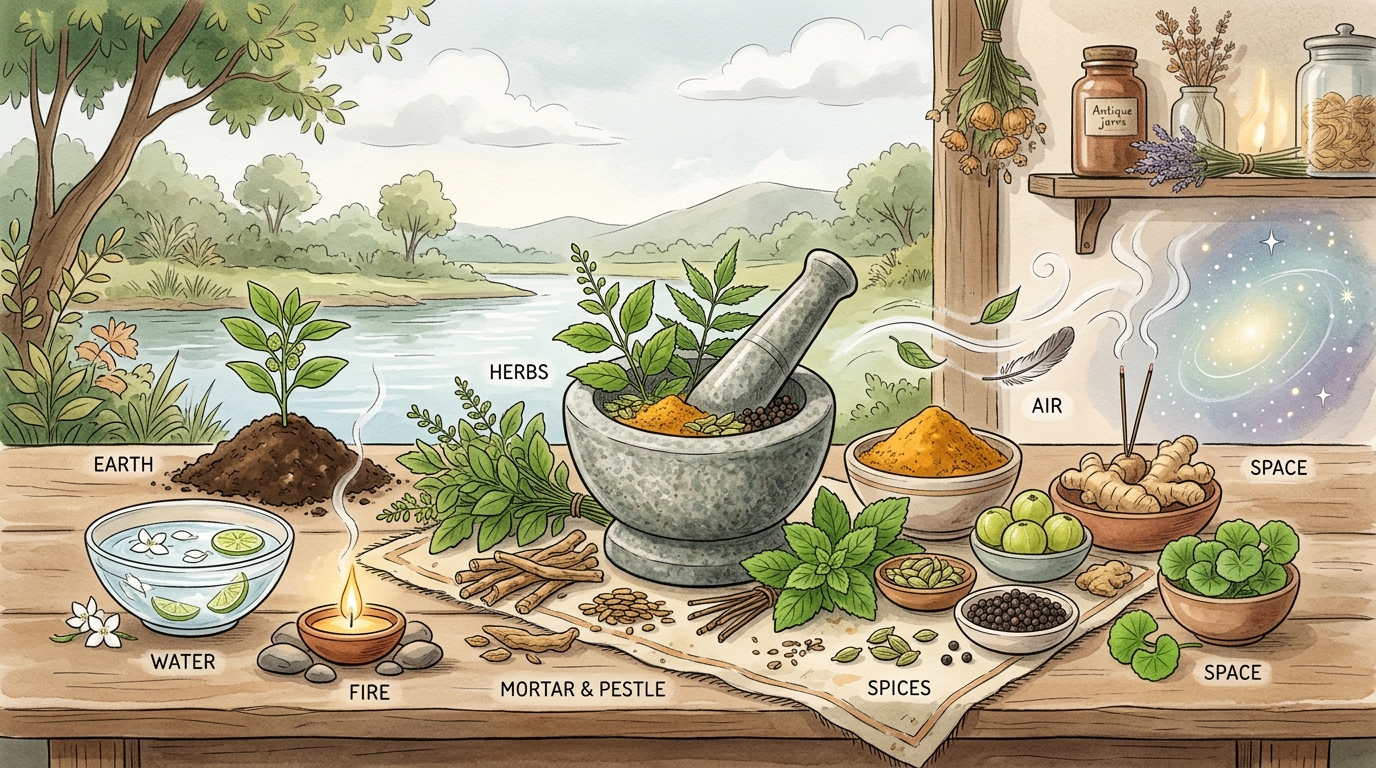
Ayurveda, often translated as the “Science of Life,” is a 5,000-year-old system of natural healing that has its origins in the Vedic culture of India. More than a mere system of treating illness, Ayurveda is a science of life (Ayur = life, Veda = science or knowledge).
The Five Elements and the Three Doshas
According to Ayurvedic philosophy, everything in the universe, including our bodies, is made up of five fundamental elements: Space, Air, Fire, Water, and Earth. These elements combine to form three primary life forces or energies, known as Doshas.
- Vata (Space and Air): Governs movement in the body, the activities of the nervous system, and the process of elimination. When balanced, Vata promotes creativity and flexibility.
- Pitta (Fire and Water): Controls digestion, metabolism, and energy production. In balance, it promotes understanding and intelligence.
- Kapha (Earth and Water): Governs the structure of the body and holds the cells together. It forms muscle, fat, and bone. In balance, Kapha is expressed as love, calmness, and forgiveness.
A Holistic Approach to Health
Unlike Western medicine, which often focuses on managing symptoms, Ayurveda seeks to identify and address the root cause of an illness. Health is not just the absence of disease, but a vibrant state of balance between the mind, body, and spirit.
Simple Ayurvedic Practices for Daily Life
- Tongue Scraping: Clearing toxins (ama) from the tongue each morning.
- Warm Lemon Water: Drinking warm water with a squeeze of lemon to kickstart digestion.
- Mindful Eating: Eating in a calm environment and chewing food thoroughly to assist the digestive fire (Agni).
- Abhyanga (Self-Massage): Massaging the body with warm herbal oil to nourish the skin and calm the nervous system.
Embracing Ayurveda doesn’t mean completely overhauling your life overnight. By making small, mindful changes, you can align more closely with nature’s rhythms and tap into your body’s innate wisdom for healing.