
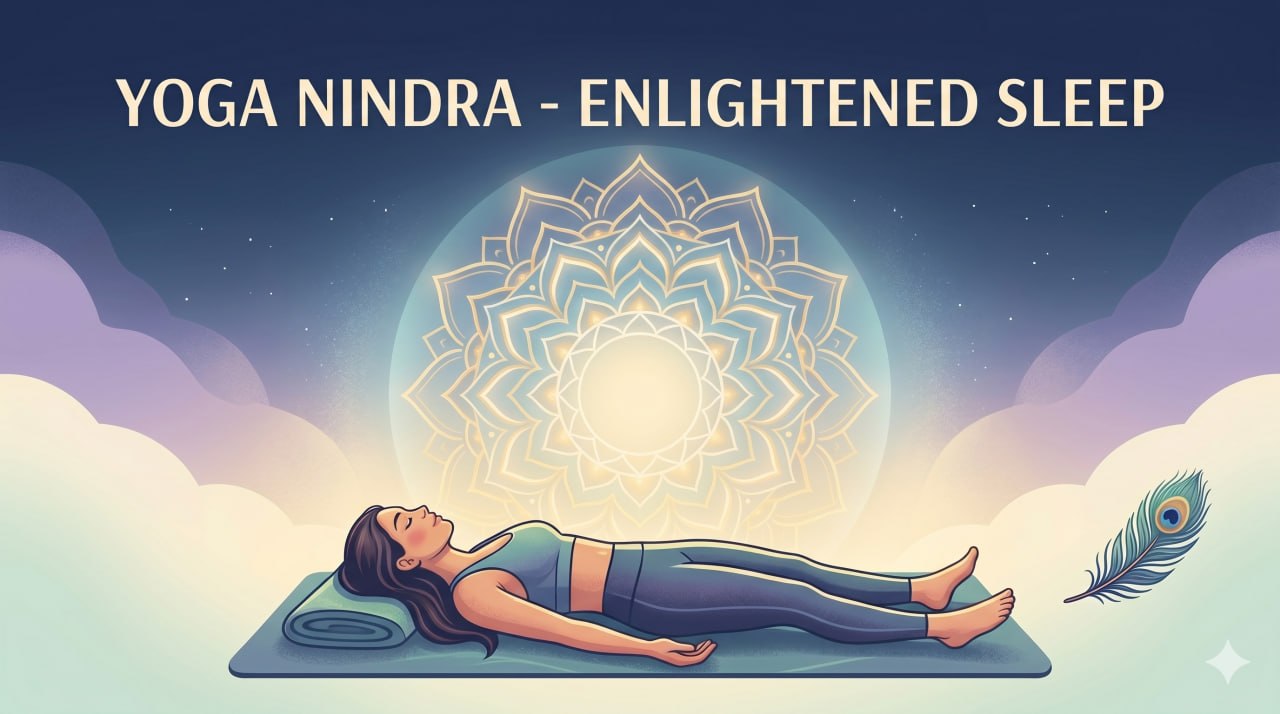
If you’ve ever finished a yoga class and felt like the final five minutes of lying still were better than the actual workout, you’ve had a tiny taste of Yoga Nidra.
Often called “yogic sleep,” Yoga Nidra isn’t about snoring on a mat; it’s a systematic method of inducing complete physical, mental, and emotional relaxation while maintaining a sliver of awareness.
What Exactly is Yoga Nidra?
At its core, Yoga Nidra is a guided meditation that takes you through the various layers of your being. While it looks like a nap, your consciousness is actually functioning at a deeper level of awareness. It sits in the sweet spot between wakefulness and sleep, where the body rests but the mind remains lucid.
The Science of the “In-Between”
During a session, you move from the active Beta brain waves of daily life into Alpha and Theta waves. This state allows your nervous system to switch from “Fight or Flight” (Sympathetic) to “Rest and Digest” (Parasympathetic).
| State | Brain Wave | Description |
|---|---|---|
| Waking | Beta | Alert, logical, stressed, or active thinking. |
| Relaxed | Alpha | Reflective, calm, and the gateway to the subconscious. |
| Dreaming/Deep Meditation | Theta | Deep relaxation, imagery, and emotional integration. |
| Deep Sleep | Delta | Unconscious, restorative, and healing. |
How It Works: The Stages of the Journey
A typical Yoga Nidra session follows a specific structure designed to “turn off” the external world and “turn on” the internal one:
- Sankalpa (Internal Resolve): You set a short, positive intention or “seed” for your practice.
- Rotation of Consciousness: You mentally scan your body, part by part, which helps detach the mind from physical sensations.
- Breath Awareness: Focusing on the rhythm of the breath to further steady the mind.
- Opposite Sensations: Feeling heat/cold or heaviness/lightness to balance the brain’s hemispheres.
- Visualization: Using guided imagery to unlock the subconscious and release hidden tensions.
Why Should You Try It?
You don’t need to be flexible, and you don’t need a quiet mind to start. Yoga Nidra is arguably the most accessible form of yoga because the only requirement is to lie down.
- Massive Stress Reduction: It effectively lowers cortisol levels and helps manage anxiety.
- Better Sleep: Practitioners often find that 30 minutes of Yoga Nidra feels as restorative as 2–4 hours of conventional sleep.
- Emotional Healing: By accessing the subconscious, it helps in processing trauma or deep-seated habits without the “noise” of the conscious mind.
- Enhanced Focus: It clears the mental “clutter,” leaving you sharper and more present.